

What crowdfunding actually is
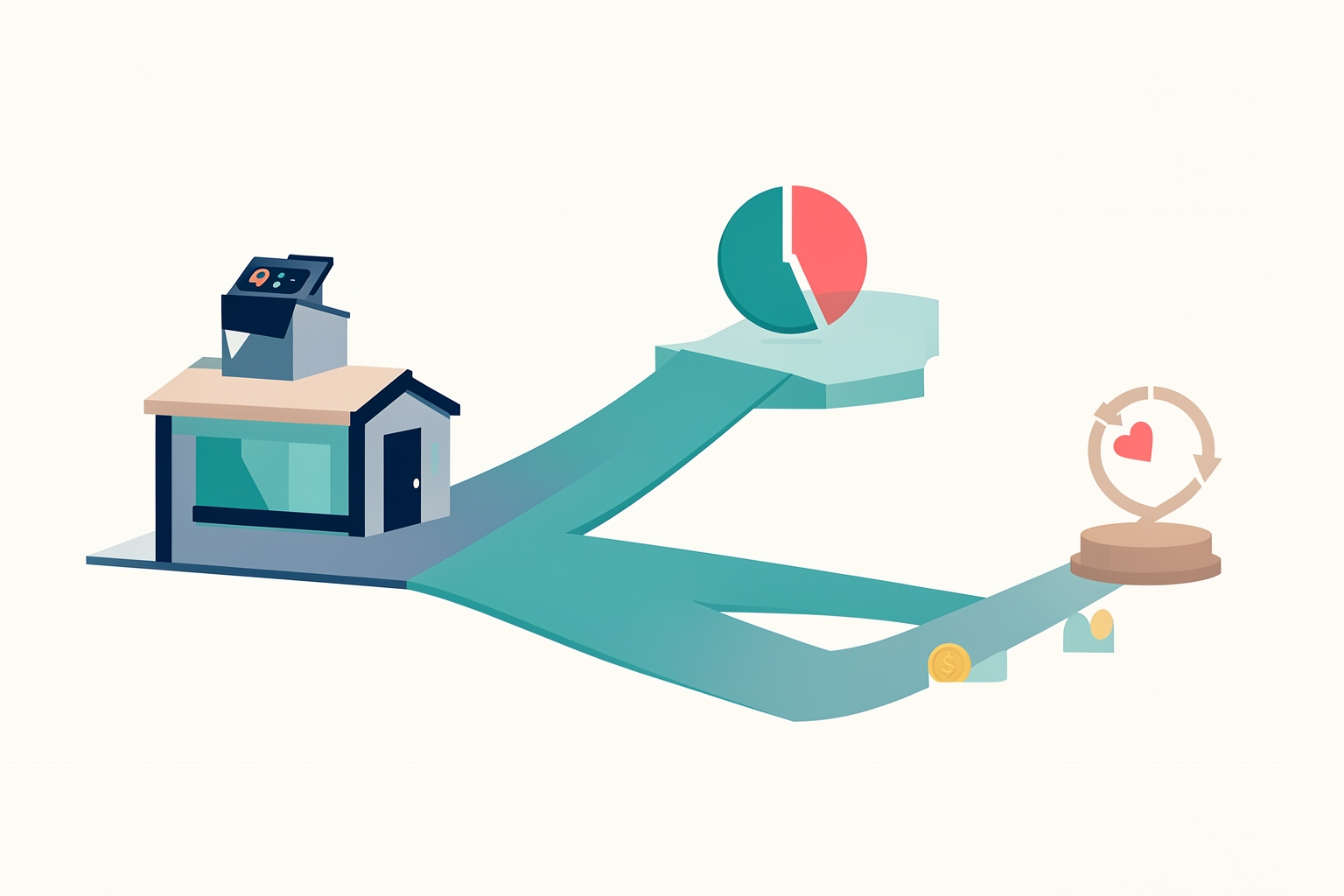
Crowdfunding sounds like one thing, but it is actually four very different deals.
In one, backers pre-order your product.
In another, they buy a slice of your company.
In a third, they give money with no expectation of return, and in the fourth, they lend it and expect it back with interest.
Picking the wrong model can cost you ownership, time or trust, so it is worth deciding deliberately.
This guide walks through the four main types of crowdfunding, what each one asks of you, and how to match a type to your startup's stage and product.
By the end, you should be able to name the model that fits your situation and know what to prepare before you launch.
Crowdfunding raises money from a large pool of individuals, usually through online platforms and social networks.
It replaces a small group of banks or institutional investors.
Contributions can range from very small to very large amounts, depending on the project and what backers get in return.
According to Stripe, the global crowdfunding market was worth over $1.83 billion as of 2025 and is projected to double by 2030.
Kickstarter alone had hosted more than 650,000 projects as of January 2025.
The scale matters less than the structure: you are asking many people to back you, and the type of crowdfunding defines what they get back.
Rewards-based crowdfunding
Backers pledge money in exchange for a product or perk.
A backer might pre-order your first production run, get an early-bird version, or receive a branded item.
Kickstarter and Indiegogo are the platforms most associated with this model.
This fits startups with a tangible product that can be manufactured and shipped.
The tradeoff is operational: once you hit your goal, you owe backers a real deliverable.
Fulfillment is where trust is won or lost, so you need a credible plan to manufacture and ship before you launch.
Equity crowdfunding
Backers become investors who receive shares or a similar stake in your company.
This is closer to traditional fundraising, opened up to a broader pool of smaller investors.
It suits startups that are genuinely building a high-growth business and are comfortable taking on many shareholders.
The tradeoff is ownership and complexity.
You are giving up equity, which affects future fundraising, and you take on regulatory and reporting obligations that vary by jurisdiction.
If your goal is to validate a product rather than raise a growth round, equity crowdfunding is probably heavier than you need.
Donation-based crowdfunding
Backers give money because they believe in the cause, with no financial return.
This is the natural fit for social projects, community initiatives, charities and personal causes.
A neighborhood group restoring a park or a team funding disaster relief would use this model.
For a typical for-profit startup, donation crowdfunding rarely fits, because backers have no reason to give without a return.
It can work when your startup has a strong social mission and supporters see their contribution as supporting that mission rather than buying something.
Debt-based crowdfunding
Also called peer-to-peer lending, this model means many individuals lend you money that you repay with interest.
It behaves like a loan, just funded by a crowd instead of a bank.
This fits businesses with predictable revenue that can service repayments.
The tradeoff is fixed obligation: unlike rewards backers, lenders expect their money back regardless of how your product performs.
If your revenue is uncertain, debt adds risk you may not be able to carry.
How to choose the right type for your startup
The decision comes down to three questions: what can you offer backers, what are you willing to give up, and what can you reliably deliver?
- Can you manufacture and ship a product? If yes, rewards crowdfunding is usually the natural starting point. If your product is software or a service with no shippable unit, rewards become awkward and you may lean toward equity or debt.
- Are you willing to sell ownership? If you want to keep full control and avoid the obligations of many shareholders, avoid equity crowdfunding. If you are building a venture-scale company and want a broad investor base anyway, equity can align with your plans.
- Can you handle repayment? If you have steady cash flow and a clear repayment plan, debt crowdfunding can fund growth without dilution. If revenue is unpredictable, taking on fixed repayments is a risk.
- Is your project primarily a cause? If the point is social impact rather than profit, donation-based crowdfunding matches what backers expect.
A concrete way to see the difference: two founders each need funds for a new venture.
One is building a physical kitchen gadget with a working prototype and a manufacturer lined up; rewards crowdfunding lets her pre-sell units and validate demand.
The other is building a software platform with recurring revenue and no physical product.
For him, debt crowdfunding against existing cash flow, or equity crowdfunding for a growth round, makes more sense than promising perks he cannot ship.
What a campaign actually involves
Whichever type you choose, the general process described by Stripe follows the same shape (Stripe):
- Select a platform and define your goal. Decide the amount you want to raise and choose a platform suited to your type of crowdfunding.
- Prepare before launch. The months before launch are for testing prototypes, creating marketing assets, and producing a high-quality campaign video and project description. Some platforms also support backer tiers you can populate with rewards.
- Launch and drive traffic. Use social media, email marketing, public relations and other tactics to bring people to your campaign page.
- Promote and engage. Post regular updates and engage with current and prospective backers. Keep the campaign page current throughout.
- Close and fulfill. Once you reach your goal, deliver what you promised. For rewards campaigns, that means manufacturing and shipping to early backers, a step Stripe describes as critical for maintaining trust.
Notice that most of the work happens before launch.
A campaign page is the visible tip; the prototype testing, video production and audience-building underneath it determine whether anyone arrives.
Why crowdfunding can be worth it beyond the money
Crowdfunding does more than raise cash.
Stripe highlights several benefits that apply across the types (Stripe):
- Market validation. Presenting your idea publicly lets you gauge whether people actually want it. A successful campaign can act as proof of concept for other investors and stakeholders.
- An engaged early audience. People who back your campaign are likely to become your most passionate customers and advocates.
- Real-world feedback. Backers can offer insights and suggestions before your product officially launches.
- Less ownership and financial risk, in some models. Rewards crowdfunding in particular means you are exchanging your product for funding rather than giving up equity or taking on debt.
- Publicity and future opportunities. Campaigns can generate media coverage and catch the attention of potential partners and investors.
That validation benefit is why crowdfunding pairs naturally with testing your idea in public before you commit years to it.
If you are still deciding whether to test at all, it helps to see why most startup ideas should be tested publicly before heavy investment.
Where crowdfunding sits among your funding options
Crowdfunding is one option on a wider menu.
Stripe's startup funding guide places it alongside grants, angel investors, venture capital, accelerators, and revenue-based financing (Stripe).
Each has different costs.
Accelerators, for example, can require a stake of your business in exchange for expertise and funding.
Weigh whether the benefits are worth the cost at your stage.
The same weighing applies here.
Crowdfunding's advantage is access: it democratizes financing and can reach capital when traditional channels fall short.
Its cost is exposure and obligation.
Your idea goes into the world earlier than it might otherwise, and in rewards and debt models, you owe backers something concrete regardless of how the venture develops.
If you are weighing crowdfunding against other paths, read a comparison of bootstrapping versus raising funding.
The underlying question is the same: how much control are you trading for how much capital, and how fast?
Common mistakes to avoid
- Choosing equity when you only need validation. If your real question is whether people want the product, a rewards campaign answers it without diluting ownership.
- Launching before you can fulfill. Hitting your goal creates a manufacturing and shipping obligation. Without a plan, you risk damaging trust with your earliest supporters.
- Underestimating pre-launch work. Stripe's process description puts prototype testing, marketing assets and video production in the months before launch, not during the campaign.
- Taking on debt without a repayment plan. Debt crowdfunding behaves like a loan. Without predictable cash flow, repayments become a fixed burden.
- Going silent after launch. Regular updates and active engagement with backers are described as crucial, not optional.
Your next step
Pick your type using the three questions above: what you can offer, what you will give up, and what you can deliver.
Then audit your readiness for that specific model.
A rewards campaign needs a prototype, a fulfillment plan and a story worth sharing.
An equity campaign needs clean ownership terms and comfort with regulation.
A debt campaign needs cash flow.
A donation campaign needs a cause people care about.
Once you know your type, the practical work is the same across all of them.
Define a goal, choose a platform, prepare your assets, and build the audience that will show up on day one.
If you are still shaping the idea itself, clarifying how to explain what your startup does will make every campaign page, video and pitch stronger.
Take the next step with Ideoreto. Use the ideas in this guide as a starting point for your next project.
Register for Ideoreto to get started.